George Lakoff: How Brains Think: The Embodiment Hypothesis

Published on Apr 7, 2015 Keynote address recorded March 14, 2015 at the inaugural International Convention of Psychological Science in Amsterdam. Saturday, 14 March 2015 George Lakoff Departments of Linguistics and Cognitive Science, University of California, Berkeley, USA How do we answer the question, “How are thought and language constituted by the brain’s neural circuitry?” … Read more
SSRIs Add to the Existing Surplus of Serotonin in the Raphe Nucleus and Reduces Serotonin in Hippocampus, Where it Is Needed Most

This appears to be the first good research showing why SSRIs do not work for most people in treating depression and anxiety. It appears that early life stress increases serotonin levels in the brain to the point that a negative feedback loop develops, reducing the brain’s sensitivity to the serotonin. The resulting depression and/or anxiety … Read more

Best Psychology & Neuroscience Books of 2014 (according to me)

Here are some of the best books I have been exposed to this year. Obviously, I cannot read everything, so this is a partial list at best. They are listed in alphabetical order. Descriptive text is from the publisher’s blurb on Amazon. A few of these books warrant the RECOMMENDED READ classification. Adult Attachment Patterns … Read more

When Does “Altering Brain Function” Become “Mind Control”?

From Frontiers in System Neuroscience, this article looks at the resurgent interest in functional neurosurgery for “psychiatric illness.” The preferred approach is deep brain stimulation (DBS) technology, “because it allows clinicians to directly alter the functions of targeted brain regions, in a reversible manner, with the intent of correcting diseases of the mind, such as … Read more

RSA Replay: Mind Change – Susan Greenfield

The video included here is of “Baroness” Susan Greenfield speaking at The RSA about her new book, Mind Change: How Digital Technologies Are Leaving Their Mark on Our Brains (to be released in the U.S. in January, 2015). Her talk was mired in controversy before she ever opened her mouth (see the details in the … Read more

Spectral Signatures of Reorganised Brain Networks in Disorders of Consciousness

This hit the news a couple of weeks ago (Oct. 16), but I am just now getting around to posting it. This is a huge breakthrough in understanding the mechanisms of consciousness, and it also provides a way to identify true brain death from “locked-in” syndrome. I include here a summary of the research from … Read more

Secrets of The Human Brain (Full Documentary)

This is a full 90-minute documentary on the human brain from The History Channel. Like all of their documentaries, there is some stupid sh!t – seems they can’t help themselves from pandering to the lowest common denominator. Secrets of The Human Brain (Full Documentary) Unlock the secrets of this three-pound organ to reveal the untapped … Read more

The Pin1 Enzyme and Synaptic Plasticity

This study looked specifically at inhibitory synapses – “The signal it transmits hinders activation of the postsynaptic neuron, making it less likely for it to become activated and emit its action potential,” according to Paola Zacchi, a SISSA [International School for Advanced Studies (Italian: Scuola Internazionale Superiore di Studi Avanzati, SISSA) researcher who coordinated the … Read more

Steve Fleming – A Theory of Consciousness Worth Attending to

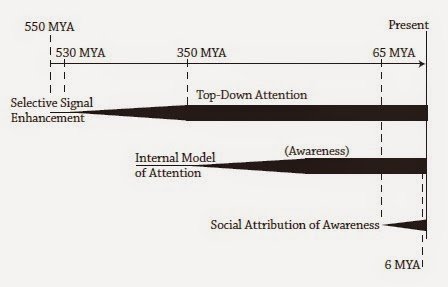
Steve Fleming, whose blog is The Elusive Self, offers a review/overview of a new theory of consciousness, as outlined by Michael Graziano in his 2013 book, Consciousness and the Social Brain. I happen to have this book, but I have not gotten around to reading it. In the front matter of the book there is … Read more

Mysterious Resting State Networks Might Be What Allow Different Brain Therapies to Work

From Pacific Standard, this is a brief review of new research around the efficacy of deep brain stimulation and transcranial magnetic stimulation for the treatment of various types of psychological distress (depression, bipolar, and so on). Their results suggest that brain networks might be used to understand why brain stimulation works and to improve this … Read more