Michael Behar – Can the Nervous System Be Hacked?
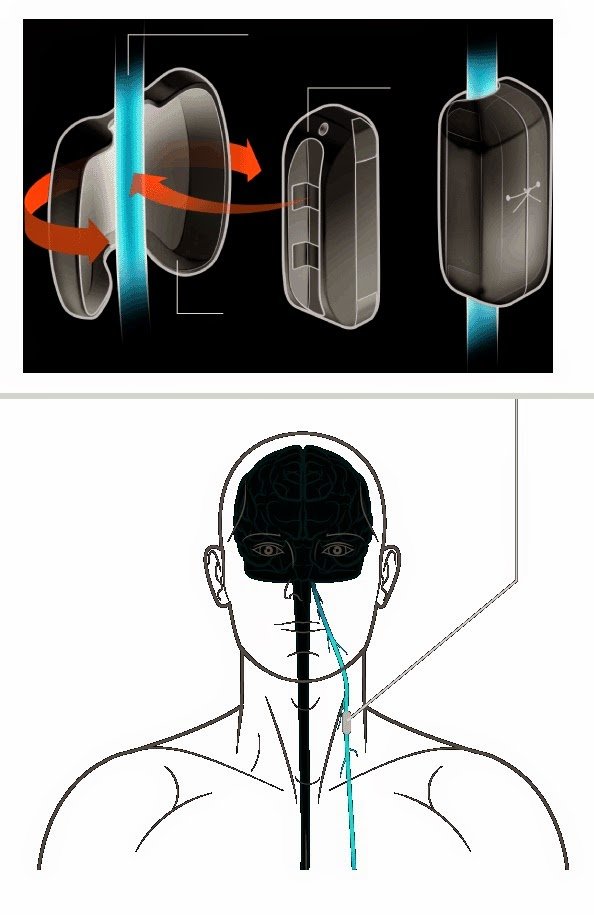
I Tuesday I shared the Bessel van der Kolk article from the New York Times Magazine. From the same issue is this article on how we are learning to “hack” the nervous system to turn on the immune system and to change brain states. Another recent article, “How the ‘Gut Feeling’ Shapes Fear,” identified the … Read more

How the ‘Gut Feeling’ Shapes Fear

Via Eidgenössische Technische Hochschule Zürich, this press release looks at new research on how the vagus nerve is part of our innate fear and anxiety systems. Nice to this being studied and published in a major journal, but Stephen Porges‘ polyvagal theory outlined this years ago. Below the press release from ETH Zurich, there is … Read more

A Revolutionary Approach to Treating PTSD (Bessel van der Kolk)

This week’s New York Times Magazine featured an in-depth article about the work of Bessel van der Kolk and his work in treating post-traumatic stress disorder (PTSD) through somatic avenues (i.e., the body). It’s a pretty balanced article, which is appreciated even though I am a fan of his work. It would be great if … Read more

An Asymmetric Inhibition Model of Hemispheric Differences in Emotional Processing

Over the last few decades, there has been considerable research into the function of the prefrontal cortex, especially as it relates to emotional processing (and affect regulation). Dr. Dan Siegel’s work has emphasized this brain region in both attachment patterns and in mindfulness practice, which led to his Mindsight approach to healing developmental traumas and … Read more

Priscilla Long – What Killed My Sister? [On Schizophrenia]

This is an interesting article on schizophrenia from The American Scholar. The author seems to throw all of the prevailing theories against the wall the see what sticks, to find some way to make sense of how her sister died. One of the pieces missing, however, is the fact that an extremely large percentage of … Read more

Hallucinating Yourself Can Be Both a Symptom and a Tool

Dissociation, derealization, and depersonalization have always been a coping mechanisms the human brain can employ when reality is too intolerable. Occasionally, this can result in the experience of seeing one’s double, or doppleganger. But what happens when it’s not part of mental illness, and not organic (often the insular cortex)? Can the experience of an … Read more

Bruce Hood on the Domesticated Brain (The RSA)

Bruce Hood is the author of The Self Illusion: How the Social Brain Creates Identity (2012). His new book is The Domesticated Brain: A Pelican Introduction, and he was at The RSA in England recently to talk about the new book. Bruce Hood on the Domesticated Brain 7th May 2014 Listen to the audio  (full … Read more

Steven Pinker – ‘What Could Be More Interesting than How the Mind Works?’

A long and interesting interview with Steven Pinker from the Harvard Gazette. Pinker is the author of a lot of really, really thick books, including The Better Angels of Our Nature: Why Violence Has Declined (2012), The Stuff of Thought: Language as a Window into Human Nature (2007), The Blank Slate: The Modern Denial of Human … Read more

Buddhism, Mind, and Cognitive Science – UC Berkeley Conference

Buddhism, Mind, and Cognitive Science Conference, April 25-26, 2014, UC Berkeley This conference is dedicated to the exploration of the methodological underpinnings of the current encounter between Buddhism and cognitive science. Among the presenters and panelists are: Dan Arnold (Philosophy of Religion, University of Chicago) Lawrence Barsalou (Psychology, Emory University) Christian Coseru (Philosophy, College of … Read more

Mechanisms of Auditory Verbal Hallucination in Schizophrenia (Cho and Wu, 2013)

This is an interesting article on the occurrence of auditory hallucinations in psychosis/schizophrenia. It comes from the open access journal, Frontiers in Psychiatry: Schizophrenia. Later today or tomorrow I will post a commentary on this article, which is also quite interesting (if you care at all about this kind of stuff). A LOT of people … Read more