Mark P Mattson – Superior Pattern Processing Is the Essence of the Evolved Human Brain

This is an interesting theoretical article from Frontiers in Evolutionary Psychology and Neuroscience on the evolution of the human capacity for pattern processing as a uniquely human trait. According to Mattson, superior pattern processing (SPP) [is] the fundamental basis of most, if not all, unique features of the human brain including intelligence, language, imagination, invention, … Read more
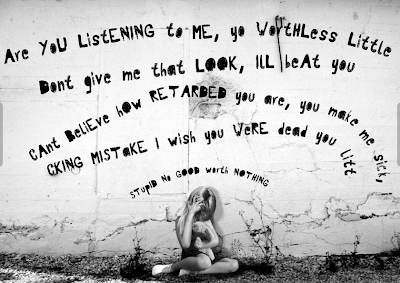
Vaughan Bell – A Social Visit with Hallucinated Voices

In this brief article from the PLOS Neuroscience Community blog, Vaughan Bell looks at the experience of hallucinated voices and how the hearer responds to them. Most who experience voices conceptualize them as distinct entities in some way, often as people they knew or know. This piece looks at the why of experiencing these voices … Read more

Reduced Amygdala and Ventral Striatal Activity to Happy Faces in PTSD Is Associated with Emotional Numbing

From PLoS ONE, this is an interesting article on how emotional numbing in those experiencing PTSD reduces neural activity in exposure to happy faces. This study provides initial evidence that individuals with PTSD have lower reactivity to happy facial expressions, and that lower activation in ventral striatal-limbic reward networks may be associated with symptoms of … Read more

Socioeconomic Status and Structural Brain Development

From Frontiers in Neuroscience, this interesting article looks at the body of research investigating associations between socioeconomic status (SES) and brain development in children. Previous studies have found significant links between low SES and changes (deficits) in brain structure, especially in areas related to memory, executive control, and emotion. Brito and Noble review the studies … Read more

Researchers Investigate Novel Approaches to Reducing Negative Memories

Two new studies hit the news this on Wednesday, both of which involve changing the emotional impact of memories. The first was a joint project between MIT and Howard Hughes Medical Institute researchers. We’ll start with the press release from MIT, a study that uses optogenetics (light stimulation) to alter emotional connections with memories: Neuroscientists … Read more

Mapping the Mind: An Interview with Eric Kandel

Neuroscientist Joseph LeDoux interviews one of the founders of modern neuroscience, Nobel Prize winner Eric Kandel, still going strong at nearly 85 years of age. Mapping the Mind: An Interview with Eric Kandel from Imaginal Disc August 19, 2014 Host: Joseph LeDouxDirector: Alexis GambisProducer: Rose MeachamCamera: Alejandro MeijaEditor: Léo GhyselsAdministrative Support: Will ChangProduction Assistants: Danabelle … Read more

Situated Affective and Social Neuroscience (Topic Overview)

  This editorial from Frontiers in Human Neuroscience is part of (and introduction to) a special topic on Interactions between emotions and social context: Basic, clinical and non-human evidence. The whole article is presented below, along with the 22 articles in the topic – all of which have their DOIs so that they can be … Read more

J. Kevin O’Regan – Why Things Feel the Way They Do?

This is an interesting talk from J. Kevin O’Regan, former director of the Laboratoire Psychologie de la Perception (LPP), which specializes in human visual and auditory perception both in babies and adults. He is currently, since June 2013, working on a 5-year European Research Council Advanced project (FEEL) on the sensorimotor approach to consciousness and … Read more

Childhood Abuse and Neglect – The Objective Effects and the Subjective Experience

The two articles below are complimentary in their description of the impact of childhood maltreatment (CM: abuse and/or neglect). The first is only available as an abstract (paywall, of course) and the second comes from Psych Central, a nice resource for lay readers in psychology. Together these articles show the impact of CM on the … Read more

Brian Earl – The Biological Function of Consciousness

This hypothesis and theory article from the open access journal Frontiers in Theoretical and Philosophical Psychology is very in-depth and thought provoking. The main sticking point for me, however, is the first of the three primary premises Earl sets forth: (1) contrary to one’s intuitive understanding, consciousness does not have an active, executive role in … Read more