Buddhism, Mind, and Cognitive Science – UC Berkeley Conference

Buddhism, Mind, and Cognitive Science Conference, April 25-26, 2014, UC Berkeley This conference is dedicated to the exploration of the methodological underpinnings of the current encounter between Buddhism and cognitive science. Among the presenters and panelists are: Dan Arnold (Philosophy of Religion, University of Chicago) Lawrence Barsalou (Psychology, Emory University) Christian Coseru (Philosophy, College of … Read more

Juliana Breines – Why Do We Blame Victims?

Using the NFL’s bullying situation in Miami as a jumping off point, this article from the Greater Good Science Center looks at why we tend to so easily blame the victims in any situation. Why Do We Blame Victims? Why do so many people take the side of bullies over their victims? The answers might … Read more

Inside the Psychologist’s Studio with Michael Gazzaniga

This is very cool – Michael Gazzaniga is a living treasure for contributions to neuroscience and our understanding of the human brain. Among his many books are Split: The Roads Both Taken (2014 – no specific date), Who’s in Charge? Free Will and the Science of the Brain (2011), Human; The Science of What Makes … Read more

ADHD: Scientists Discover Brain's Anti-Distraction System

In 2009 researchers at Simon Fraser University discovered a system in the brain that helps us ignore irrelevant information – “the specific neural index of suppression“. Now their research suggests that the problem in disorders such as ADHD is that the “filter” or “anti-distraction system” is not functioning optimally due to either environmental factors (my … Read more

Strongest Evidence Yet of Two Distinct Human Cognitive Systems

Interesting research. The definitive book on this topic remains Thinking, Fast and Slow, by Daniel Kahneman, although his system I and system II distinction is slightly different than what is being discussed here. The current study is looking at developmental learning skills, but it too is distinguishing between explicit (more conscious) and implicit learning (less … Read more

George Atwood – The Abyss of Madness

[NOTE: I originally posted this in August of 2012. However, I am seeing clients who would fall into the definition Atwood uses for “madness.”] I am reading George Atwood’s The Abyss of Madness (Psychoanalytic Inquiry Book Series) (2011) as part of an intersubjective, relational psychoanalytic study group I have been a part of for the last … Read more

Lucid Dreaming with David Eagleman and Henry Rollins

This is an interesting talk between punk musician, author, and all-around interesting guy, Henry Rollins and neuroscientist David Eagleman, author of Incognito: The Secret Lives of the Brain (2011). Thanks to the IEET (Institute for Ethics and Emerging Technologies) for posting this on their site. Lucid Dreaming Brainwave 2011 | Posted: Mar 13, 2014 Henry … Read more

Empathy for Social Exclusion Involves the Sensory-Discriminative Component of Pain

  In a new article in the journal Social, Cognitive, Affective Neuroscience has identified the mechanism by which we tend to feel pain when we empathize with those who have been socially excluded. Here is a brief summary of the research: [A]n ecologically valid experience of social exclusion recruits areas coding the somatosensory components of … Read more

Intersubjectivity in Schizophrenia: Life Story Analysis of Three Cases

This is an interesting article that analyzes, with a qualitative model, the intersubjective aspects of schizophrenia. This may be too geeky for some readers, but I am finding more psychosis in my counseling work, and this helps me understand better what the client is experiencing.  Here is an explanation of the paper’s agenda: The processes … Read more

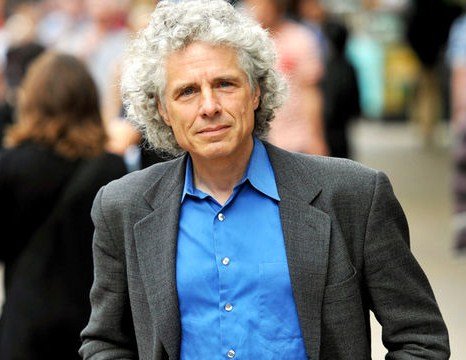
Steven Pinker on Taboos, Political Correctness and Dissent

It’s Steven Pinker… he’s got things to say, and you already know that whether you agree with his views or not, he’s always interesting to listen to, and he always manages to stimulate you to think about those interesting things yourself, so why not have a listen to a few things he has to say? … Read more