|
Currency: Swazi lilangeni
Government: Unitary state, Constitutional monarchy, Absolute monarchy, Monarchy, Diarchy, Parliamentary system
Official language: English Language, Swati Language
Welcome to the Kingdom of Swaziland!
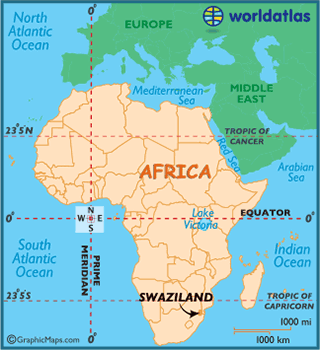
Independence On September 6, 1968, the country – one of the most ethnically homogeneous republics on the Planet– proclaimed its national independence as the Kingdom of Swaziland within the Commonwealth. It thus became the forty-second independent country in Africa. Since that time, it has become one of the few monarchies in the Third World. For almost 70 years, prior to 1968, the United Kingdom had ruled the country as a British High Commission Territory. In fact, Swaziland was one of Britain’s last colonies on the African mainland. Geography The modern country of Swaziland lies in southern Africa and is completely surrounded by formerly white-ruled South Africa and Mozambique (ex Portuguese colony).It covers about 6,704 square miles ( 17,363 km). The African monarchy–about the size of New Jersey–is the world’s 158th largest nation in area. What is more, it is one of the smallest countries by area among the former British colonies in Africa, along with Lesotho, Mauritius, Seychelles, and Gambia. This tiny kingdom enjoys a favorable climate. Most of the nation is covered with mountains (up to 4,500 feet), rainforests, and valleys. Summer Olympics In 1968, the kingdom was one of the new nations of the world, but it did not become an Olympic country until 1972. Despite its tiny size, this land is famous for its vast variety of wild animals, such as elephants, lions, rhinoceros, and leopards. Otherwise, it also is well-known for its birdlife. In Lubombo, for example, there are over 350 species of exotic birds. In recent years, the Mlilwane Wildlife Sanctuary has become one of the country’s most visited spots. Unlike a number of states in the world, this English-speaking nation has two capitals. Mbabane is the administrative capital, meanwhile Lobamba is the traditional capital. Mbabane -lies in Swaziland’s western highlands– is the largest city and was set up in the early 1900s. With a population of 100,000 people, Mbabane is home a number of traditional markets, excellent restaurants, stunning gardens, and amazing hotels. In the 2oth century, this Swazi place became one of the most peaceful cities in southern Africa. In the meantime, Lobamba has interesting places, such as the King Sobhuza II Memorial Park and the National Museum. Alejandro Guevara Onofre: Freelance writer. Alejandro is author of a host of articles/essays about over 220 countries and dependencies (and American States as well), from ecology, history, tourism and national heroes to Olympic sports, foreign relations, and wildlife. In addition, he has published some books on women’s rights, among them “History of the Women in America” and “Famous Americans”.
|