Psychological Treatments: A Call for Mental-Health Science

From Nature back in July, 2014, this is a call for more interdisciplinary sharing between neuroscientists and counselors/psychologists. There is often, in my experience, very little cross-pollination of ideas between the objective science and the interpersonal/intersubjective space of treatment. Reference:Nature 511, 287–289 (17 July 2014)doi:10.1038/511287a Psychological treatments: A call for mental-health science  Emily A. Holmes, … Read more
How to Measure Metacognition – Stephen M. Fleming and Hakwan C. Lau

From Frontiers in Human Neuroscience, this is an interesting and geeky article on how we might begin to measure metacognition (the ability to recognize our own successful cognitive functioning). Full Citation: Fleming SM and Lau HC. (2014, Jul 15). How to measure metacognition. Frontiers in Human Neuroscience; 8:443. doi: 10.3389/fnhum.2014.00443 How to measure metacognition Stephen M. … Read more

Steve Fleming – A Theory of Consciousness Worth Attending to

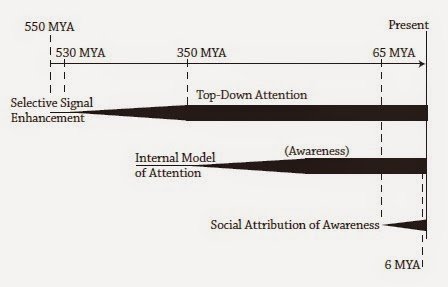
Steve Fleming, whose blog is The Elusive Self, offers a review/overview of a new theory of consciousness, as outlined by Michael Graziano in his 2013 book, Consciousness and the Social Brain. I happen to have this book, but I have not gotten around to reading it. In the front matter of the book there is … Read more

Mysterious Resting State Networks Might Be What Allow Different Brain Therapies to Work

From Pacific Standard, this is a brief review of new research around the efficacy of deep brain stimulation and transcranial magnetic stimulation for the treatment of various types of psychological distress (depression, bipolar, and so on). Their results suggest that brain networks might be used to understand why brain stimulation works and to improve this … Read more

Inflammation, the Immune System, and the Brain – New Models of Disease

In recent years, science is finally beginning to grasp the obvious fact that the human body is a system, so that when something goes wrong in one part of the organism, it has effects in other parts of the organism as well. The most obvious example of this is the new focus on the microbiome … Read more

Inflammasomes in Neuroinflammation and Changes in Brain Function: A Focused Review

This post serves as a follow-up to yesterday’s post on the relationship between trauma exposure and neuroinflammation. This review article comes from Frontiers in Neuroendocrine Science. This is from the abstract: Inflammasomes activate pro-inflammatory caspases 1 and 5, which then cleave the precursor forms of pro-inflammatory cytokines IL-1β, IL-18, and IL-33 into their active forms. … Read more

Buddhist Geeks 335: Practicing with the Brain in Mind (by Rick Hanson)

Here is part one of the Buddhist Geeks interview with Buddhist neuropsychologist Dr. Rick Hanson. Ever since the publication of Buddha’s Brain: The Practical Neuroscience of Happiness, Love, and Wisdom (2009), Hanson has been one of the prolific and popular authors and teachers in the Buddhist world. BG 335: Practicing with the Brain in Mind … Read more

Neuroscientist Carl Hart: Everything You Think You Know About Drugs and Addiction Is Wrong

Carl Hart grew up in a rough neighborhood in Miami, selling drugs, doing petty crime, and carrying a gun. But he pulled himself out of the “hood” and became a neuroscientist and now teaches psychology and psychiatry at Columbia University. He is the author of High Price: A Neuroscientist’s Journey of Self-Discovery That Challenges Everything … Read more

The Science of Emotions: Jaak Panksepp at TEDxRainier

Awesome – Jaak Panksepp is one of the founders of affective neuroscience, and author of Affective Neuroscience: The Foundations of Human and Animal Emotions (2004) and The Archaeology of Mind: Neuroevolutionary Origins of Human Emotions (2012). The Science of Emotions: Jaak Panksepp at TEDxRainier Published on Jan 13, 2014 Given an inherent subjective nature, emotions … Read more

Focused Attention, Open Monitoring, and Loving Kindness Meditation: Effects on Attention, Conflict Monitoring, and Creativity – A Review

In this new mini review from Frontiers in Cognition, Lippelt, Hommel, and Colzato compare three meditation types (focused attention, open monitoring and loving kindness) in terms of their effects on attention, conflict monitoring, and creativity. The three research areas the authors covered in this review (attentional control, performance monitoring, and creativity or thinking style) seem … Read more