
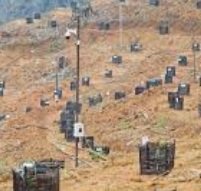
SOARING DEMAND for DURIAN (Durio zibethinus) in China is being blamed for a new wave of deforestation in Malaysia in which environmentalists warning vast amounts of jungle is being cleared to make way for massive plantations of the spiky and pungent fruit. Grown across tropical Southeast Asia whereby the durian is hailed as the “king of fruits” by fans who liken its creamy texture and intense aroma to blue cheese. But detractors say durians stink of sewage and stale vomit. The strong smell means many hotels across the region have banned guests from bringing them to rooms, while Singapore does not allow the fruit on its subway system. Nevertheless they are a hit in China and the increase in demand has prompted exporters to vie for a bigger share of the burgeoning market. Growers in Malaysia are increasingly shifting from small orchards to industrial-scale operations – a trend that environmentalists warn presents a new threat to rainforests already challenged by loggers and palm oil plantations. Right now for me durians are gaining a lot of attention from the Chinese market. Issue about deforestation for planting of durians is in preparation to meet that demand is a gimmick. In the jungle-clad district of Raub in central Malaysia, swathes of rainforest have recently been chopped down to make way for a new plantation with durian seedlings protected by netting planted across bare hillsides. The plantation is next to an area of protected forest, which is home to a kaleidoscope of animals, from monkeys to exotic birds. A river reported to be now murky and filled with trunks and branches from logging runs close by. A sign outside the plantation said it was run by Ample Harvest Produce, but company staff refused to comment when contacted about the loss of trees in the area. This article in ”Anim Agro Technology” I will discussed about durian export to China and the challanges for all readers.
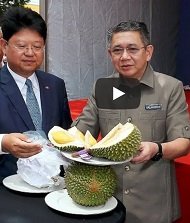
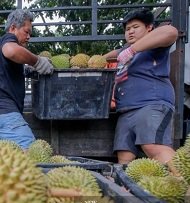
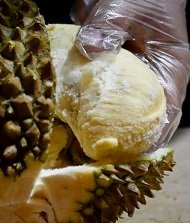
 Recently the Thai farmers are being urged to improve the quality of their durian in order to preserve market share after China’s Hainan province succeeded in growing durian seedlings imported from Malaysia. According to Ms Wanlada Rattanapanich that was director of the Department of International Trade Promotion (DITP) office in Nanning, China has said the department has watched as China attempted for quite some time to grow durian trees. Currently she said that a private company in Hainan province bought 20 ‘Sanno’ durian seedlings from Malaysia and succeeded in growing them in Sanya city in southern Hainan. According to Mr Feng Xuejie that was the president of the Hainan Tropical Fruit Institute, revealed that growing durian in China has always been a challenge for local farmers, as durian trees need more space than typical fruits and usually take four to eight years to bear fruit. They have been trying to grow durian trees for decades, but the results were mostly unsatisfactory, such as small fruit and insipid taste. Although the latest attempt to grow Sanno durians from Malaysia was quite a success, there is still the risk of failure if the farming areas cannot control the weather conditions like we did in the lab and test plots. Ms Wanlada added that although Hainan is still unable to produce sufficient quantity or quality for domestic consumption or export, with continued research and development they could become a future competitor to Thailand. Currently more than 80 per cent of fresh durians in the Chinese market are imported from Thailand. And to preserve the market share, Thai farmers need to maintain and improve the quality of our product especially in terms of fruit size and unique taste. I hope the durian industry in this region grow so that many more durian farmers enjoy the market share in future. Thanks for share this information. Wasallam!…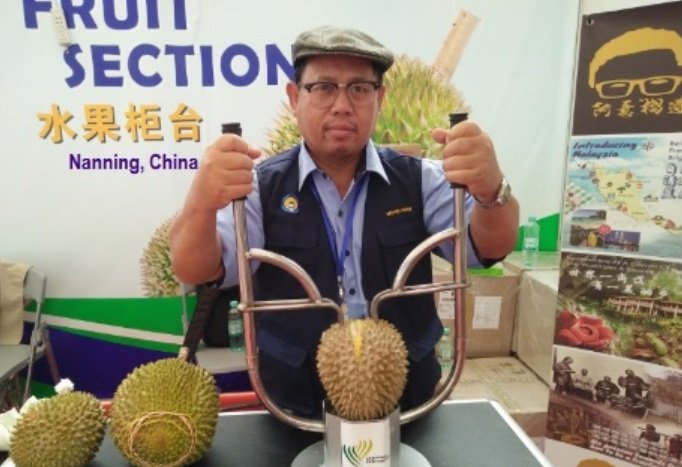
Published from:
Room 106, Hotel Orchid,
Tenom, Sabah.